
Burning feet can be caused by a number of conditions. It can even wake people up at night. You usually see it in people over the age of 50, but people under 50 can also have burning feet. This is pretty common with diabetes. It can be mild, local and easily treatable or it can indicate serious general medical care.
You may notice an ache and burning at the end of the day especially if you are on your feet all day. Hot sweaty feet can cause burning sensations. Neuropathy is common in diabetes but neuropathy is common in chronic alcoholism, vitamin deficiencies, usually vit B and heavy metal poisoning. You could have burning feet if you have tarsal tunnel syndrome also. If you notice burning sensation in the forefoot area it could be metatarsalgia, Morton's neuroma or maybe athletes foot or fungal infection.
Since this could be from so many different problems it is very important to check with your doctor to see if it is something serious or not.
If it is a mechanical problem a good fitting shoe with support is a good place to start.
The doctor will order lab work and possibly other testing to find out what the cause of your burning feet is coming from.
Saturday, June 19, 2010

Saturday, June 12, 2010
Warts
Warts are usually about 1 cm in diameter. They are a common problem among children. Sometimes a simple wart may have many small warts surrounding it. This is called a Mosaic wart. Plantar warts are often transmitted from one person to another through direct contact.
Some of the most common symptoms of plantar warts are feeling like a small stone under the foot and sometimes there is pain when direct force placed on the area when walking. There could be pain when squeezed. The surface of the wart is rough looking and you can see dark spots on the surface. This is the warts blood supply.
Warts are caused by the human papilloma virus (HPV) If there is a break, or a scratch in the skin the HPV can enter the skin, causing a wart
Some of the most common symptoms of plantar warts are feeling like a small stone under the foot and sometimes there is pain when direct force placed on the area when walking. There could be pain when squeezed. The surface of the wart is rough looking and you can see dark spots on the surface. This is the warts blood supply.
Warts are caused by the human papilloma virus (HPV) If there is a break, or a scratch in the skin the HPV can enter the skin, causing a wart
Sunday, June 6, 2010
podiatric management and patients with peripheral vascular disease
Podiatric managemet for people with peripheral vascular disease would include:
A complete evaluation an d assessment of the status of the circulation to the foot.
Advise on foot care and shoes.
Proper care of toenails, corns and calluses and other foot conditions.
Keep in mind that wounds, sores and infections may develop as the result of poor circulation.
Usually vascular testing would be ordered, if not already done by a vascular doctor.
There is a lot you can do to help yourself if you have poor circulation. Follow your doctors advice about exercising. Foot care for people with circulatory problems is very important.
A complete evaluation an d assessment of the status of the circulation to the foot.
Advise on foot care and shoes.
Proper care of toenails, corns and calluses and other foot conditions.
Keep in mind that wounds, sores and infections may develop as the result of poor circulation.
Usually vascular testing would be ordered, if not already done by a vascular doctor.
There is a lot you can do to help yourself if you have poor circulation. Follow your doctors advice about exercising. Foot care for people with circulatory problems is very important.
Saturday, May 22, 2010
Peripheral vascular disease
Peripheral vascular disease or PVD is a name given to a group of problems that causes poor circulation to the feet and legs. The most common cause of this is artherosclerosis in which there is a gradual thickening and hardening of the walls of the arteries. Diabetes is the most common cause of PVD.
Symptoms include a dull cramping pain in the calf muscle after walking that is relieved by resting. This is called claudication. There can be numbness in the foot or toes. You may notice changes in the color of the skin where it becomes pale, bluish or reddish. Also some patients notice a change in skin temperature where the foot becomes cooler. Skin breakdowns, infection and sores do not heal as well as they should.
Symptoms include a dull cramping pain in the calf muscle after walking that is relieved by resting. This is called claudication. There can be numbness in the foot or toes. You may notice changes in the color of the skin where it becomes pale, bluish or reddish. Also some patients notice a change in skin temperature where the foot becomes cooler. Skin breakdowns, infection and sores do not heal as well as they should.
Saturday, May 15, 2010
Tarsal Tunnel
Tarsal Tunnel syndrome is a condition caused by entrapment of the tibial nerve on the inside of the ankle.
It is very tight in this area of the foot so there is very little room for any expansion if the nerve becomes inflamed or enlarged. This inflammation of the nerve causes the entrapment.
When this entrapment compresses the nerve it could cause pain, burning, and tingling on the bottom of the foot. You could notice that this worsens as the day progresses. It is relieved by rest, elevating the foot or rubbing the area. A doctor may order an EMG which may reveal decreased nerve conduction around the tarsal tunnel. If a Dr. thinks a soft tissue mass is causing the entrapment then he may order a MRI.
People with very flat feet or if they pronate then they are more likely to develop tarsal tunnel.
Some systemic diseases such as rheumatoid arthritis can cause a swelling in joints that may compress on the nerve.
Conservative treatment consists of the use of an orthotic especially if the feet are very flat. Anti-inflammatory drugs may be helpful and sometimes steroid injections can be effective.
It is very tight in this area of the foot so there is very little room for any expansion if the nerve becomes inflamed or enlarged. This inflammation of the nerve causes the entrapment.
When this entrapment compresses the nerve it could cause pain, burning, and tingling on the bottom of the foot. You could notice that this worsens as the day progresses. It is relieved by rest, elevating the foot or rubbing the area. A doctor may order an EMG which may reveal decreased nerve conduction around the tarsal tunnel. If a Dr. thinks a soft tissue mass is causing the entrapment then he may order a MRI.
People with very flat feet or if they pronate then they are more likely to develop tarsal tunnel.
Some systemic diseases such as rheumatoid arthritis can cause a swelling in joints that may compress on the nerve.
Conservative treatment consists of the use of an orthotic especially if the feet are very flat. Anti-inflammatory drugs may be helpful and sometimes steroid injections can be effective.
Saturday, May 8, 2010
web toes
Webbed toes is the common name for syndactyle affecting the feet. It is characterised by fusion of two or more digits of the feet. It is common in ducks and amphibians, but in people it is considered unusual only occurring in one in 2,000 live births.
Various levels of webbing, from partial to complete. Mot commonly the second and third toes are webbed or joined by skin and flexible tissue.
Webbed toes are also known as "twin toes", "duck toes" or "tiger toes".
The exact cause of the condition is unknown. In some cases close family members may share this condition.
Web toes is purely cosmetic. It does not impair ability to perform any activities like walking, running or swimming. It does not improve swimming abilities however.
Surgery can be performed to separate the toes. The end result depends on the extent of webbing and bone structure. There is scarring and skin grafts may be required. Nerve damage may lead to loss of feeling in toes and a tingling sensation.
Various levels of webbing, from partial to complete. Mot commonly the second and third toes are webbed or joined by skin and flexible tissue.
Webbed toes are also known as "twin toes", "duck toes" or "tiger toes".
The exact cause of the condition is unknown. In some cases close family members may share this condition.
Web toes is purely cosmetic. It does not impair ability to perform any activities like walking, running or swimming. It does not improve swimming abilities however.
Surgery can be performed to separate the toes. The end result depends on the extent of webbing and bone structure. There is scarring and skin grafts may be required. Nerve damage may lead to loss of feeling in toes and a tingling sensation.
Sunday, May 2, 2010
cracked heels
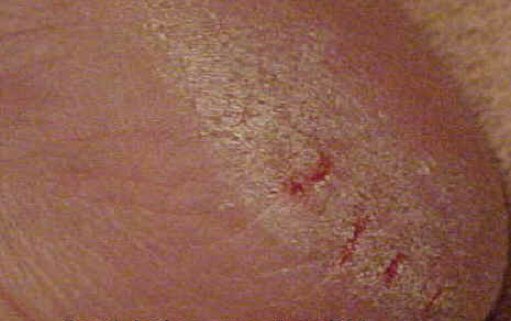
Cracked heels are a common foot problem that is sometimes referred to as heel fissures. They are caused by dry skin and made more complicated if the skin around the rim of the heel is thick. For most people this is a nuisance and cosmetic problem but when the fissures or cracks are deep they are painful to stand on and the skin can bleed.
Some people tend to have naturally dry skin that predisposes them to the cracks. The dry skin around the heel that is more likely to crack is often due to mechanical factors that increase pressures in that area like the way you walk.
Other factors that can be involved in the cause of cracked heels include prolonged standing, being overweight, open back on the shoes. This allows the fat under the heel to expand sideways and increases the pressure to crack. Some medical conditions predispose to a drying skin.
At Advanced Foot Care Clinic we offer Gormel 20 cream. This has 20% urea which is the highest amount of urea that is offered over the counter. Urea is a exfoliate and a moisturizer. This is very effective if you are experiencing heel problems.
Subscribe to:
Posts (Atom)

 Posts
Posts


